Not a Book, but a State of Mind: How Audience Research by gloozd and UCU Reshaped Old Lion Publishing House's Communication Language
01.07.2026
READING TIME 11 MINUTES
"Old Lion Publishing House" (Staroho Leva Publishing House / VSl) – is one of the largest and most beloved publishing houses in Ukraine, creating books for children and adults.
Context
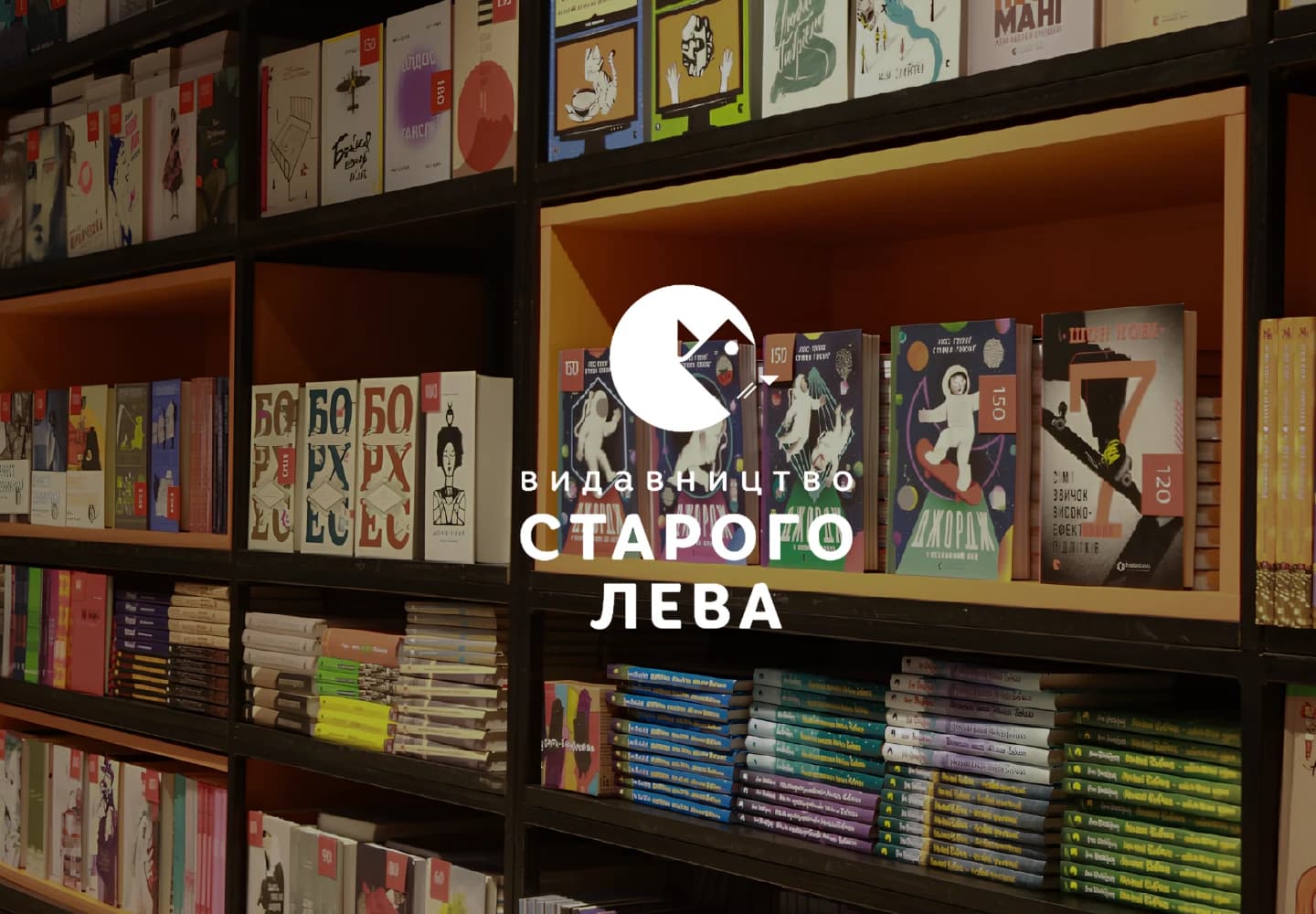
"Old Lion Publishing House" (Staroho Leva Publishing House / VSl) – is one of the largest and most beloved publishing houses in Ukraine, creating books for children and adults. They are famous for paying immense attention to design, layout, and illustrations – their books are a pleasure even just to hold in one's hands or to give as gifts. For many, VSl – has long ceased to be about paper and text, and is instead about coziness, aesthetic rituals, and the atmosphere of their bookstore-cafes.
challenge
VSl came to us with a single problem – they wanted to update their website, and for this, they wanted to understand what customers need. After several deep digs into the problem, we realized that the issue was complex: to do something for the customer, it is not enough to simply hear their requests, one must understand who the customer is, why they need it, and how they live outside the context of the business's existence. Roughly speaking - segmenting and developing personas. Since the expected results were large-scale, the study was agreed upon and conducted in the format of a business challenge for UCU student teams, while we took on the mentoring and methodological expertise: assessing the quality of the work, synthesizing findings, and supporting the transition from academic research to practical tools for marketing and product.
solution
Four teams independently investigated the VSl audience using two different methodological schools. One line - UX/CX design research: personas, customer journey maps, mapping barriers and unmet needs. The second - academic-sociological: factor analysis, constructing indices, clustering the audience by motivational and value dimensions, testing hypotheses. For those interested in the process from the inside: one team built personas using a qualitative, "live" description method – with cultural details like BookTok, Goodreads, pre-order rituals with colored sticky notes – and brought each segment to a ready-made CJM with recommendations. Another went the route of strict statistics – factor analysis to identify hidden dimensions of motivation, then clustering based on them, and testing hypotheses. This altogether provided the business with tools they could use immediately, along with a methodologically grounded typology and key strong insights (influencer channels, cashback, events). The combination of these two perspectives became the foundation of the final audience picture. The main work began after the presentation: the insights of both schools were synthesized into a single audience picture, which could then be handed over to the marketing and product teams of VSl.
What we learned and applied
The first thing that changed - was the tone in which VSl talks about books. Instead of a book-as-a-product - feelings, coziness, the state of mind after reading. This became a guide for copywriters. The same principle became the basis for email, push, and Viber communications - instead of genres and discounts, motivation-based approaches now work: books for silence, stories after a hard day, reading as a way to slow down. Viber is being tested as an additional channel. Summer promotions are planned taking into account gift-giving behavior, the demand for curated lists, aesthetics, and digital detox. The approach to product descriptions changed: new texts for book cards are checked not only for whether they convey the plot, but whether they sell the emotion, atmosphere, gift potential, and the reason to buy specifically from VSl. On the website and in the CRM, the research sparked personalization ideas - compilations based on mood, wishlists, "buks" reminders, recommendations based on previous purchases, and clearer communication of the loyalty program.
result
The research showed: for the VSl audience, a book - is not so much an informational object as it is an aesthetic and emotional one.
People do not buy a genre, but a state of mind - silence, a pause, a gift, a way to slow down.
Clear segments emerged with different motivations: from those who come through social networks and bloggers (conversion in this channel reached 88%), to an audience for whom series, book aesthetics, and gift-giving behavior are crucial.
Separately, the demand for digital detox and the culture of "slow" reading was highlighted.
// ready to start?
